

Ecospheres of Justice and Democracy: A European Perspective on the Climate Crisis
Tijdschrift voor Mensenrechten 24(2)
Professor Christina Eckes’s latest article explores how climate litigation can strengthen democratic decision-making by requiring states and companies to justify their climate action against human rights, legal obligations and climate science. Please note that the article is in Dutch.
Abstract
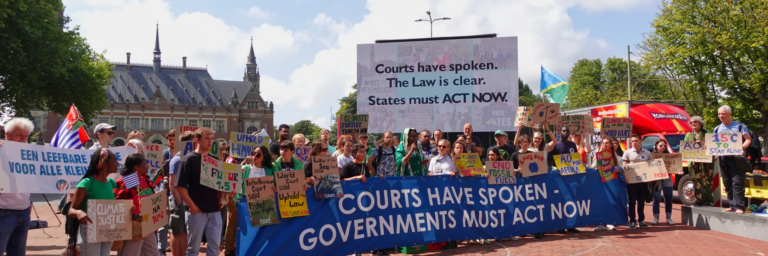
In her article, Eckes argues that the climate crisis deepens structural tensions between majoritarian politics and universal rights because governments tend to prioritise the short-term interests of current voters, while adequate climate policy must also account for future generations, disadvantaged groups and people beyond national borders. Courts can address this democratic blind spot by requiring states, and increasingly major corporate emitters, to justify their conduct against legal obligations, human rights and climate science.
Specifically, judicial review is presented as part of a democratic “ecology” of justification.
Strategic climate litigation should therefore be understood as part of a broader process of democratic deliberation. Judicial proceedings create a forum in which claims about responsibility, burden-sharing and mitigation must be justified and tested, and can expose inconsistencies between professed climate ambition and actual conduct. At the same time it stresses that economic or political considerations cannot justify unlimited emissions where finite carbon budgets, human rights and duties to prevent serious harm impose legal constraints.